When water gets in: the consequences of hidden façade damage
An unusual call-out in July 2024 took us to a rented property where, following a severe storm, water had suddenly started flowing from the roller shutter box into the living room. What initially looked like a typical case of water damage turned into a real investigation – with a surprising cause.
Initial clues: the roller shutter box under suspicion
The building was occupied in 2015 – previously, there had been no problems with damp or leaks. The resident immediately recorded a video of the damage.
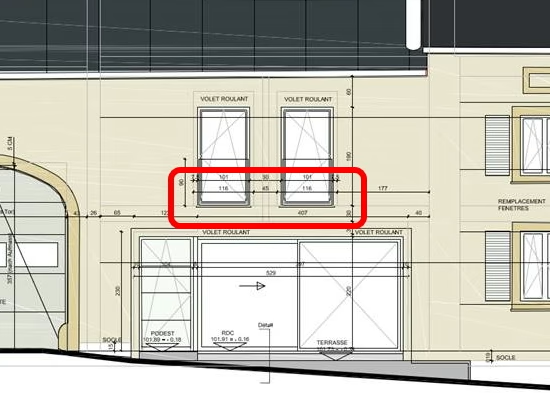
The architect overseeing the work suspected leaking window perimeter joints. All the façade junction joints above the affected roller shutter box were therefore renewed. That seemed plausible – but some doubt remained.
A second incident – this time with more extensive water damage
In May 2025, after another evening storm, it happened again: Water flowed into the living room.
This time, the architect recommended opening up the façade – the cause had to be somewhere. However, another inspection of the window perimeter joints revealed nothing new. No visible defects.
Searching the roof – gutter, junction, panels
As large volumes of water were involved in both incidents, a roof problem was considered.
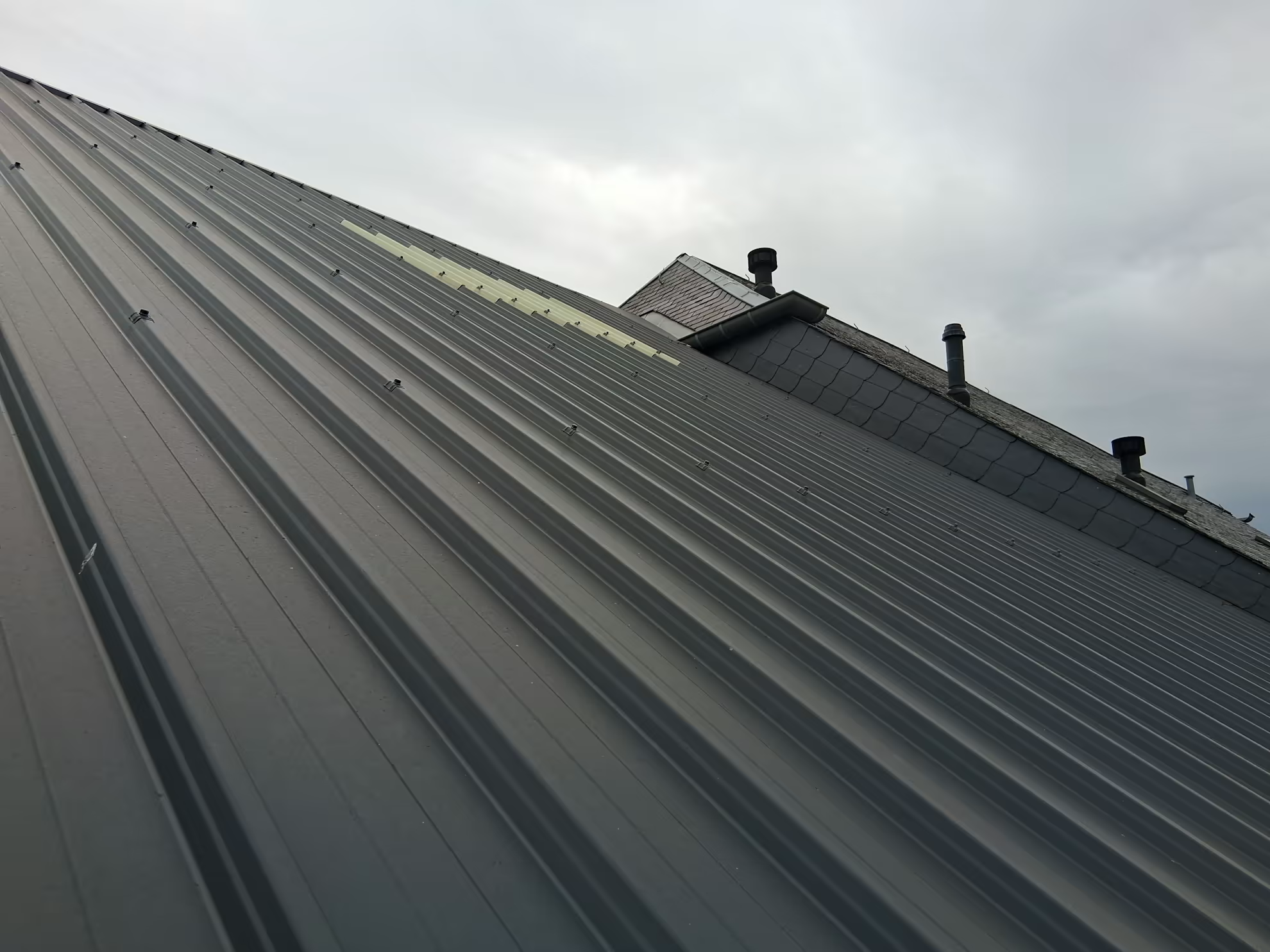
The underside of the roof was inspected: insulated roof panels – watertight.
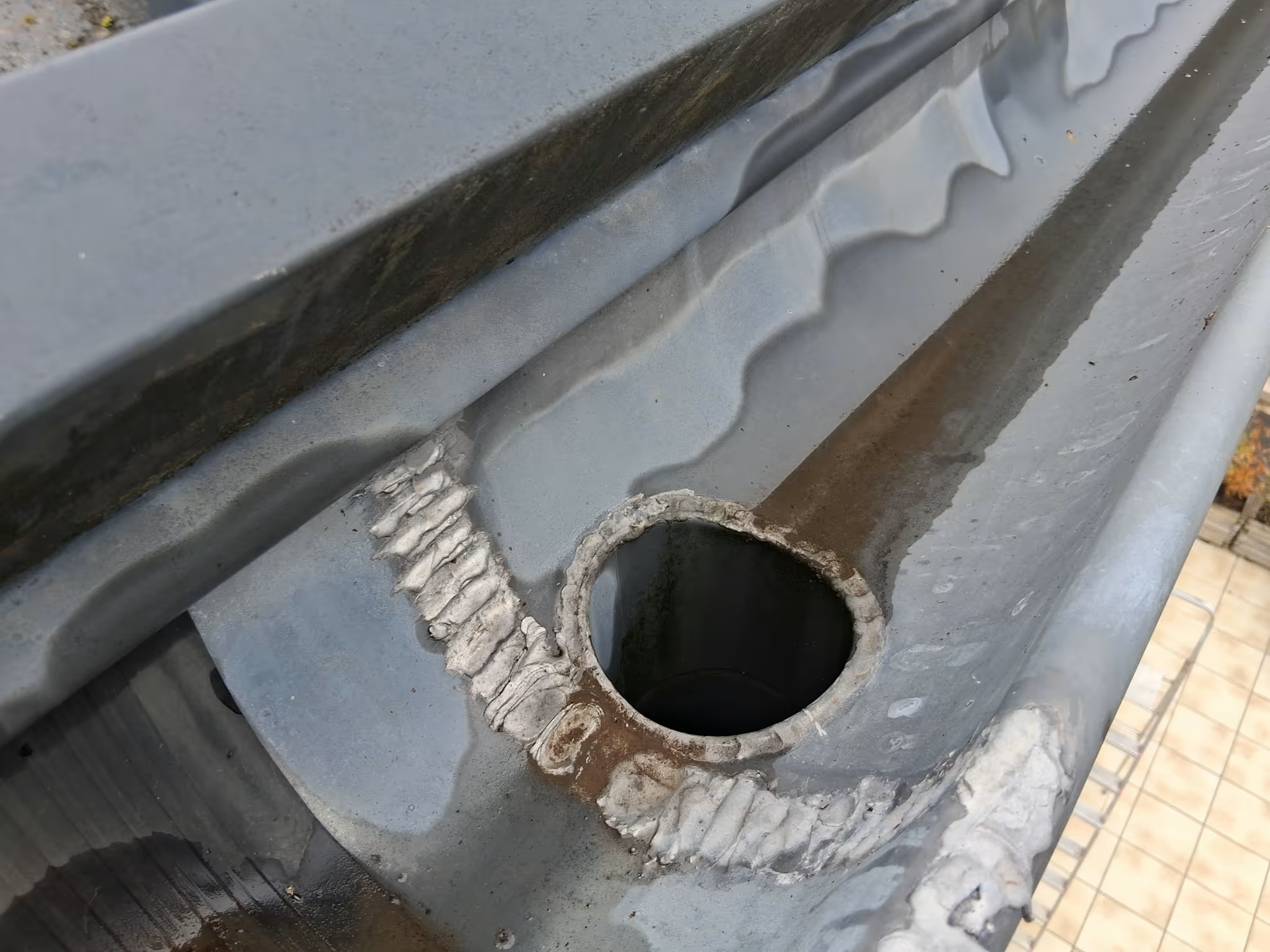
The gutter? Generously sized and completely clear.
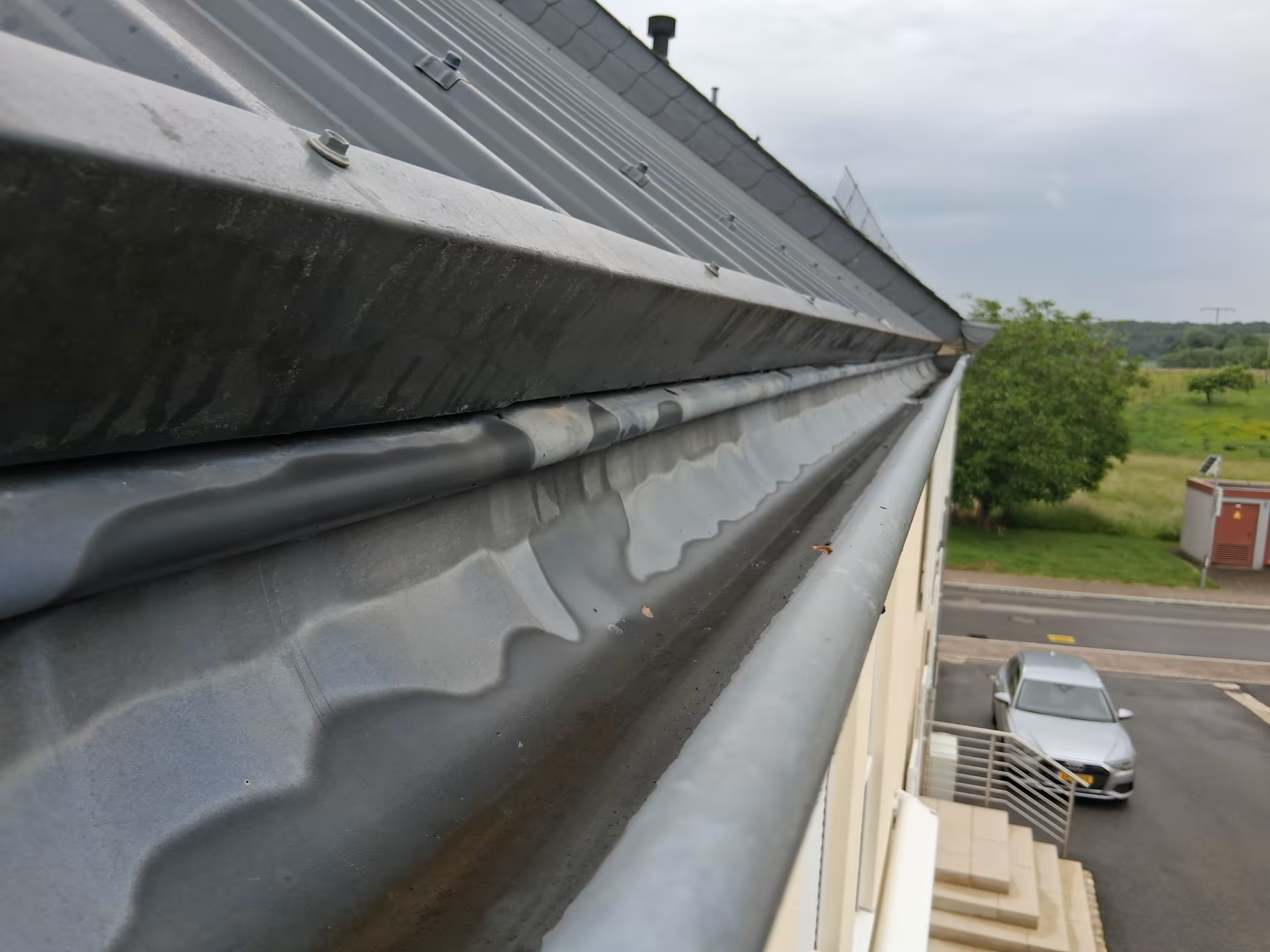
But then, a closer look at the eaves revealed a detail that no one had noticed before – and that was exactly where the real problem lay.
The real cause: a small detail with a big impact
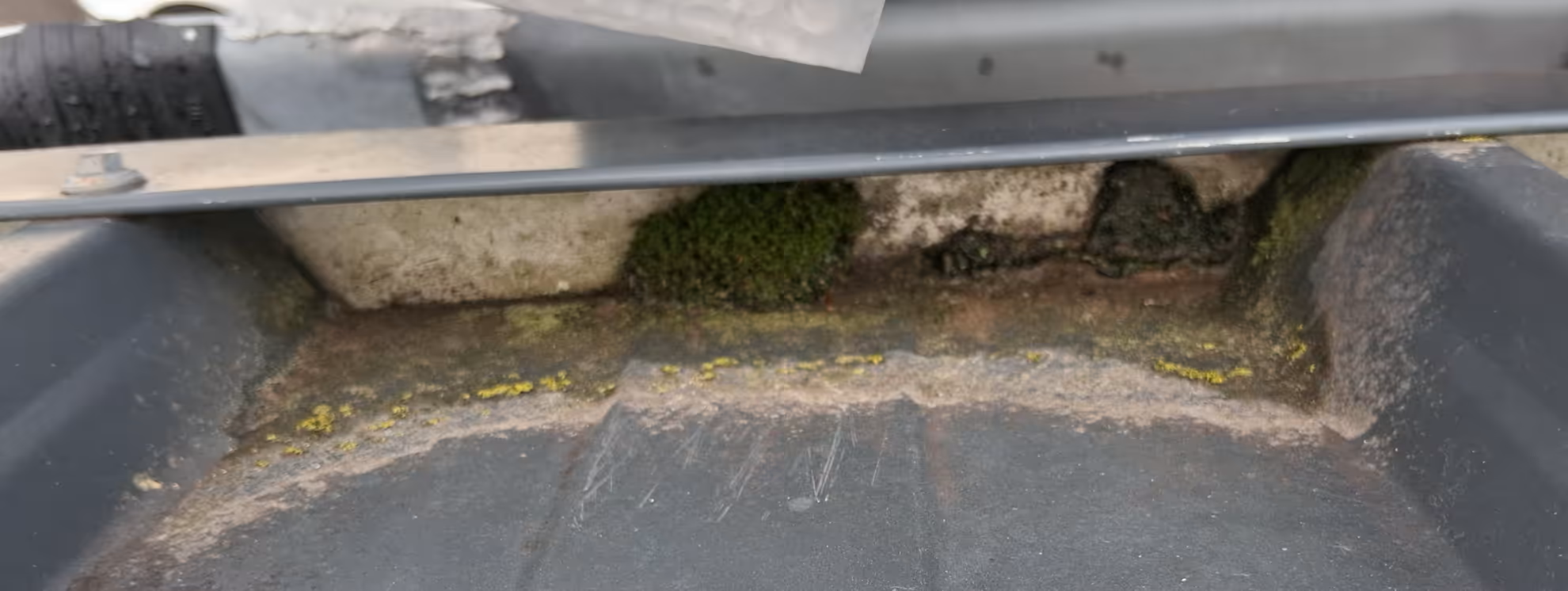
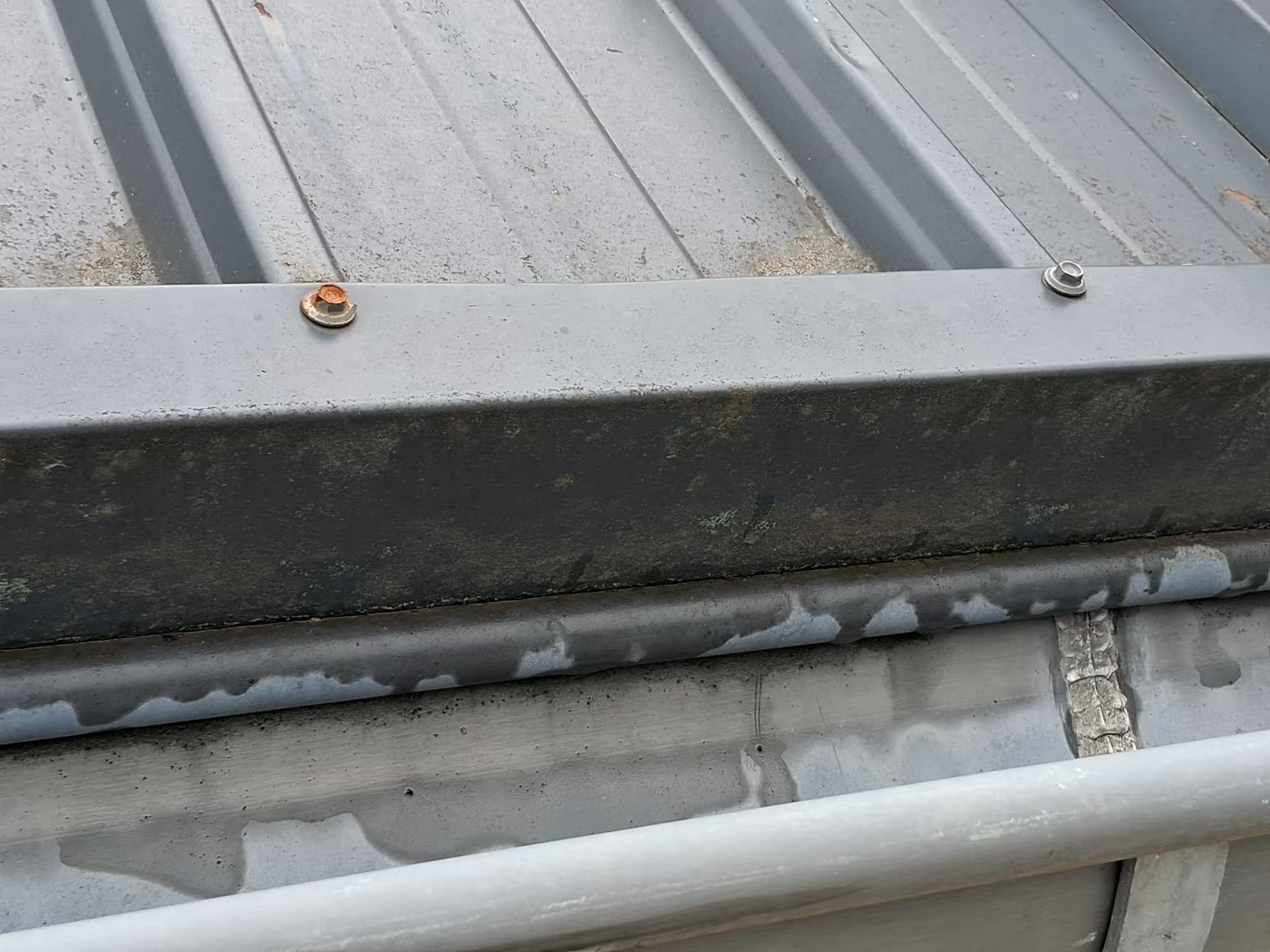
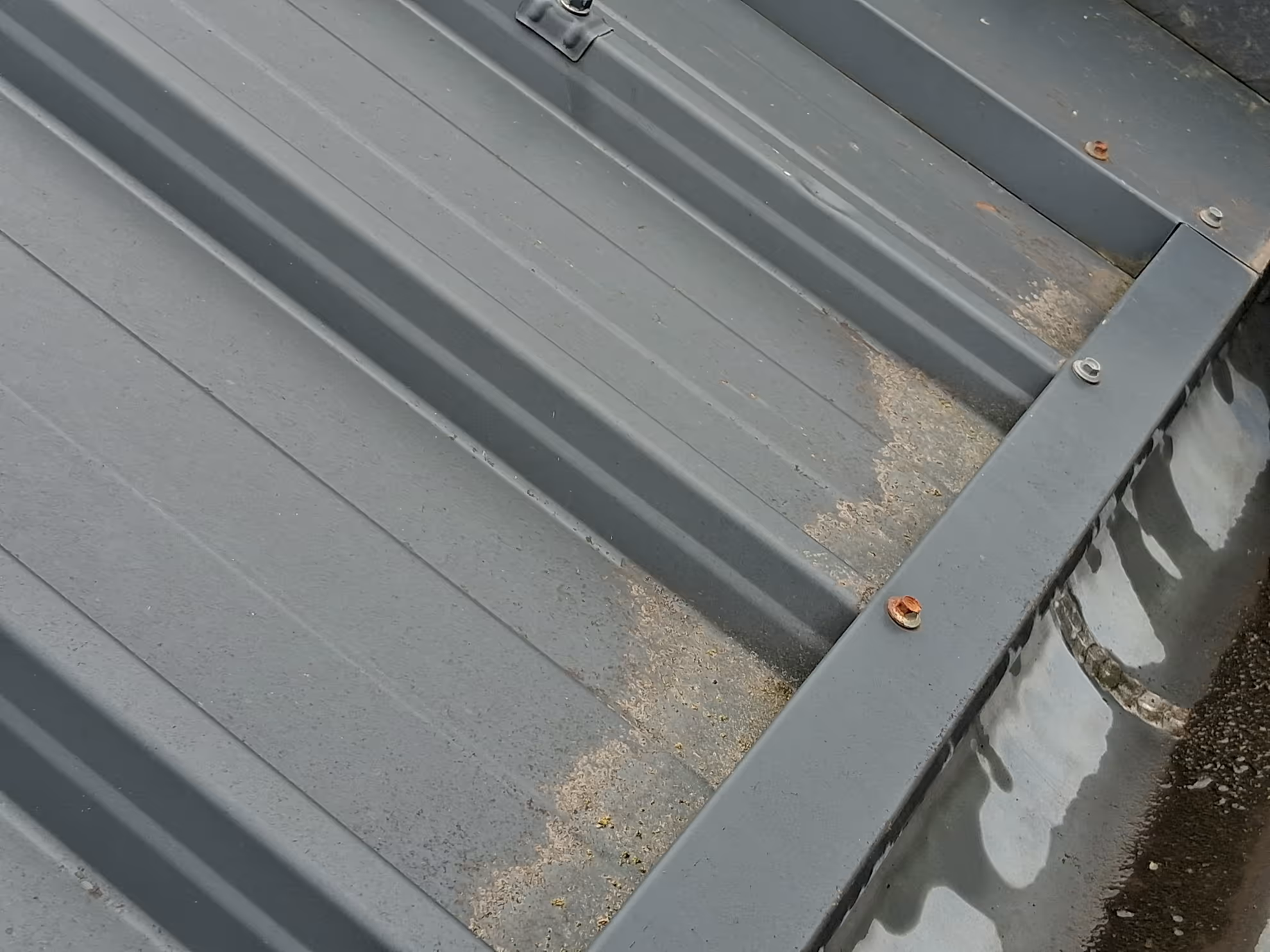
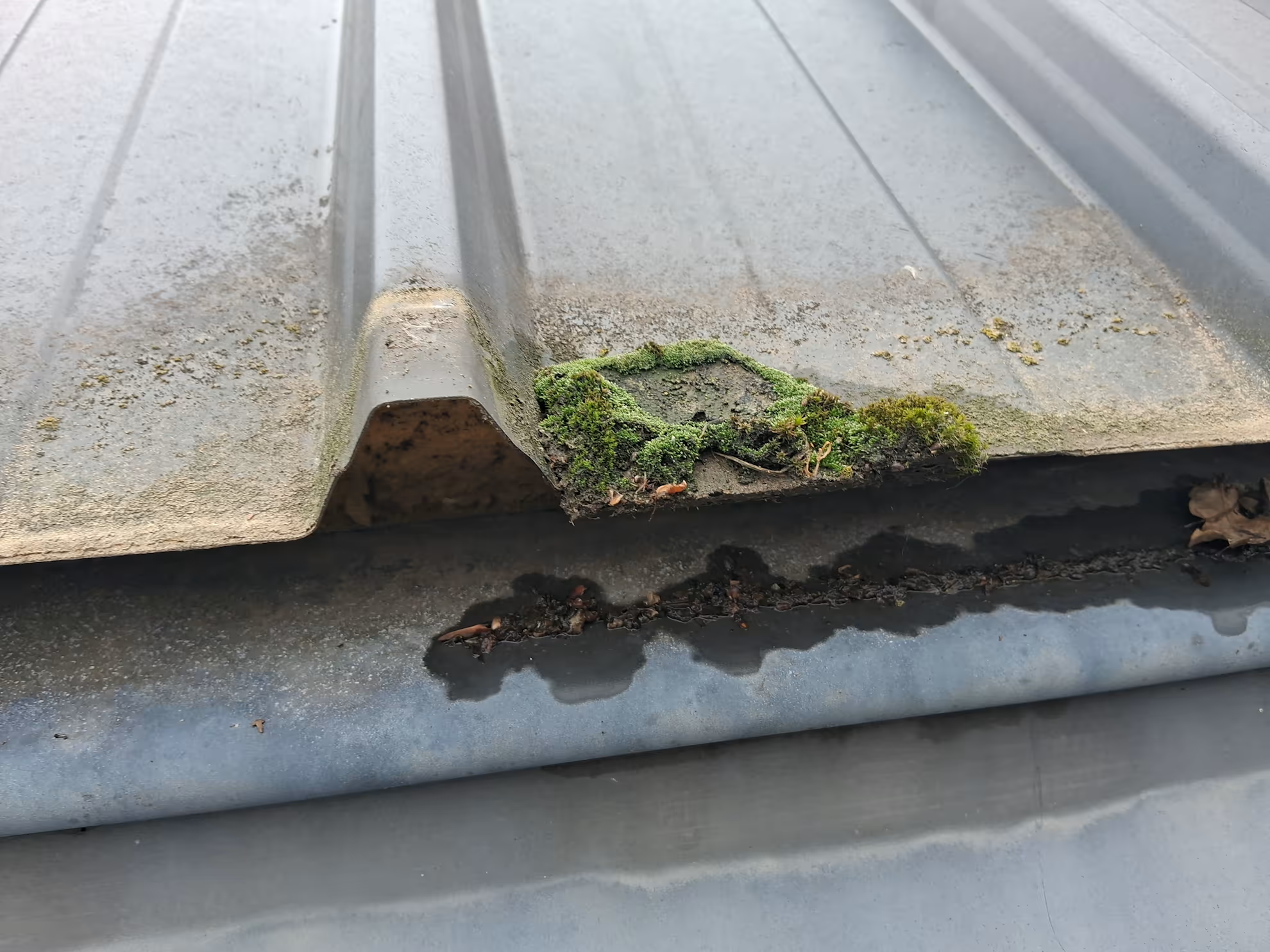
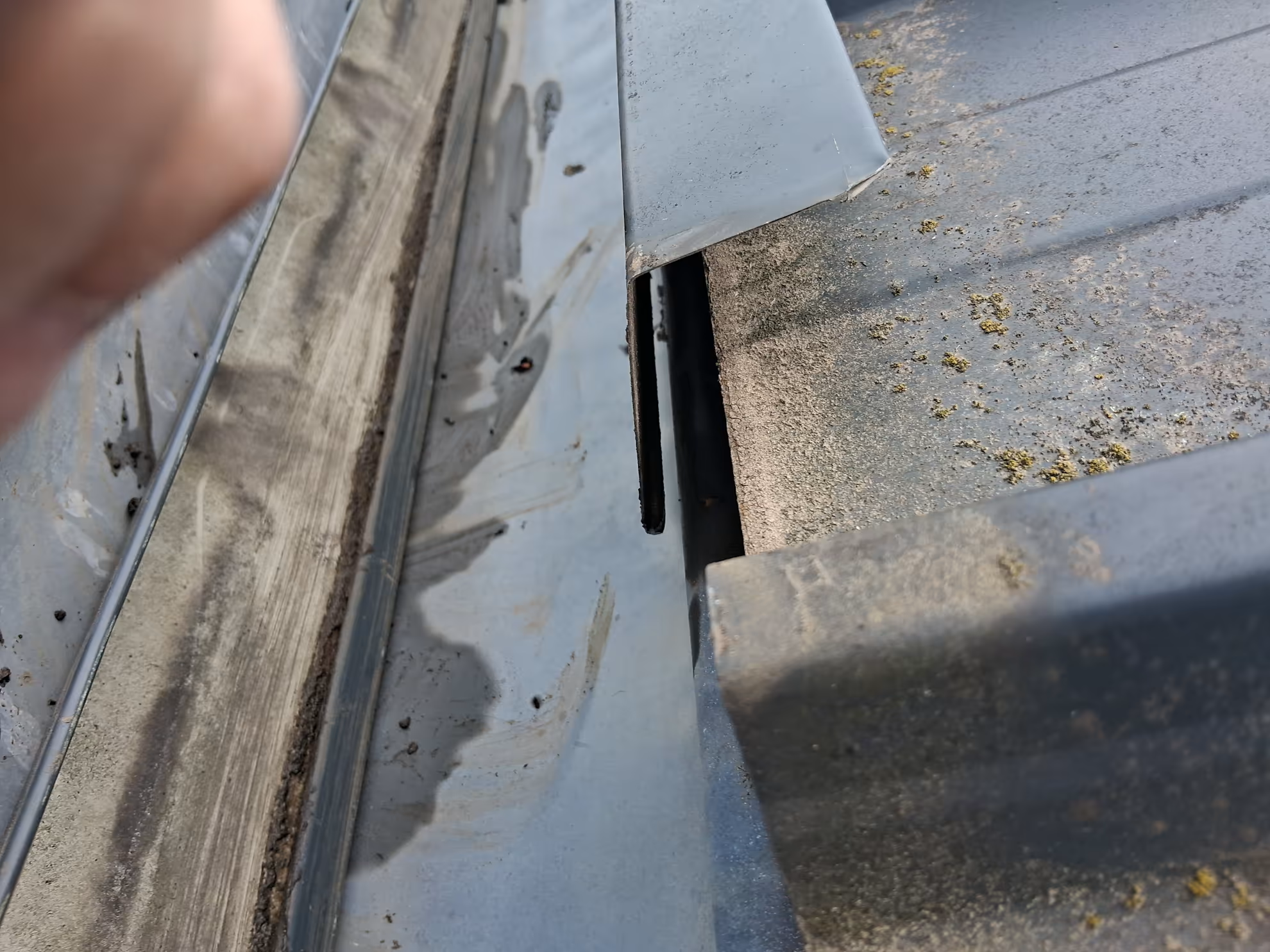
For aesthetic reasons – and to protect against bird damage – beneath the roof panels a base flashing had been fitted.
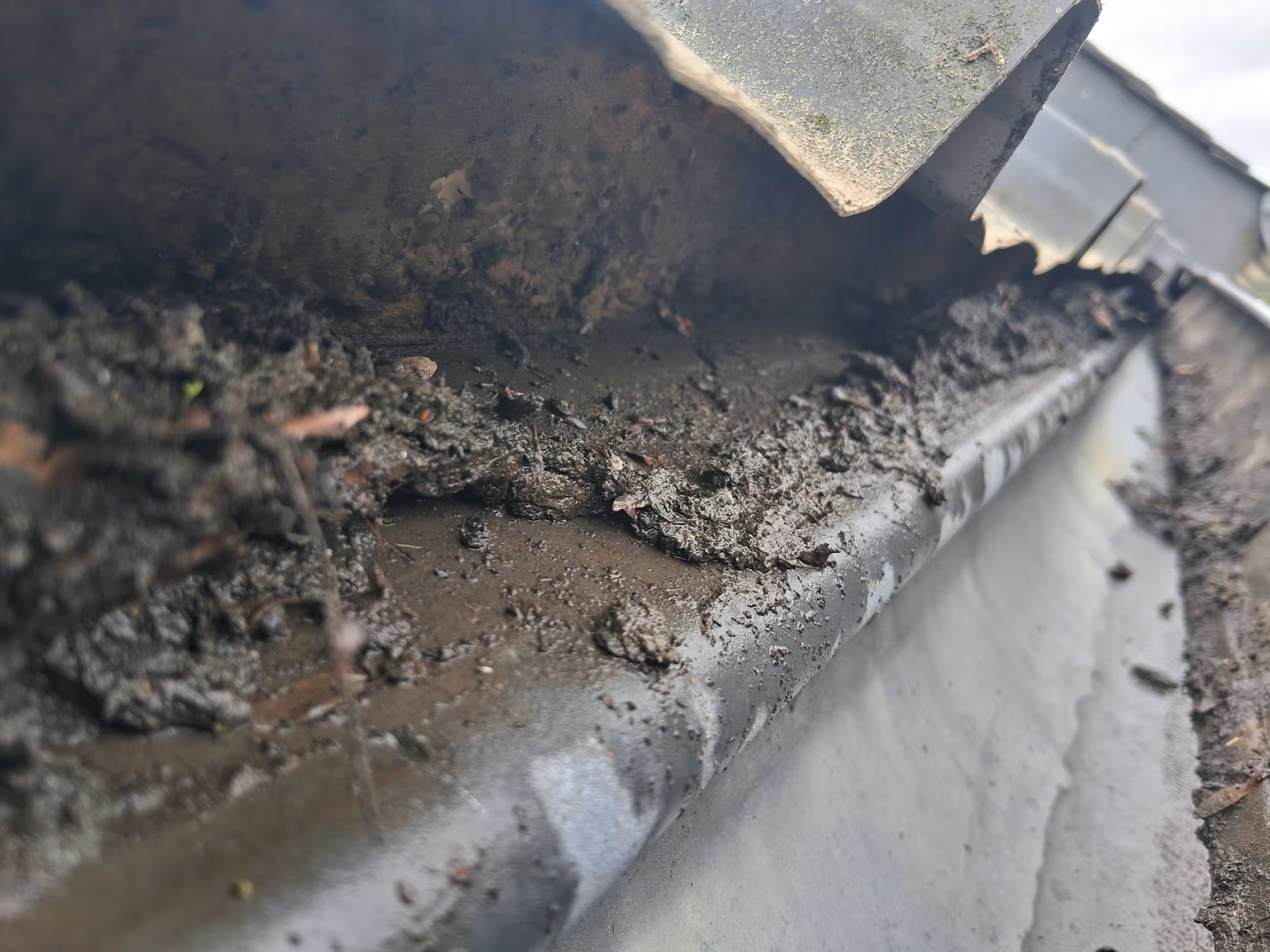
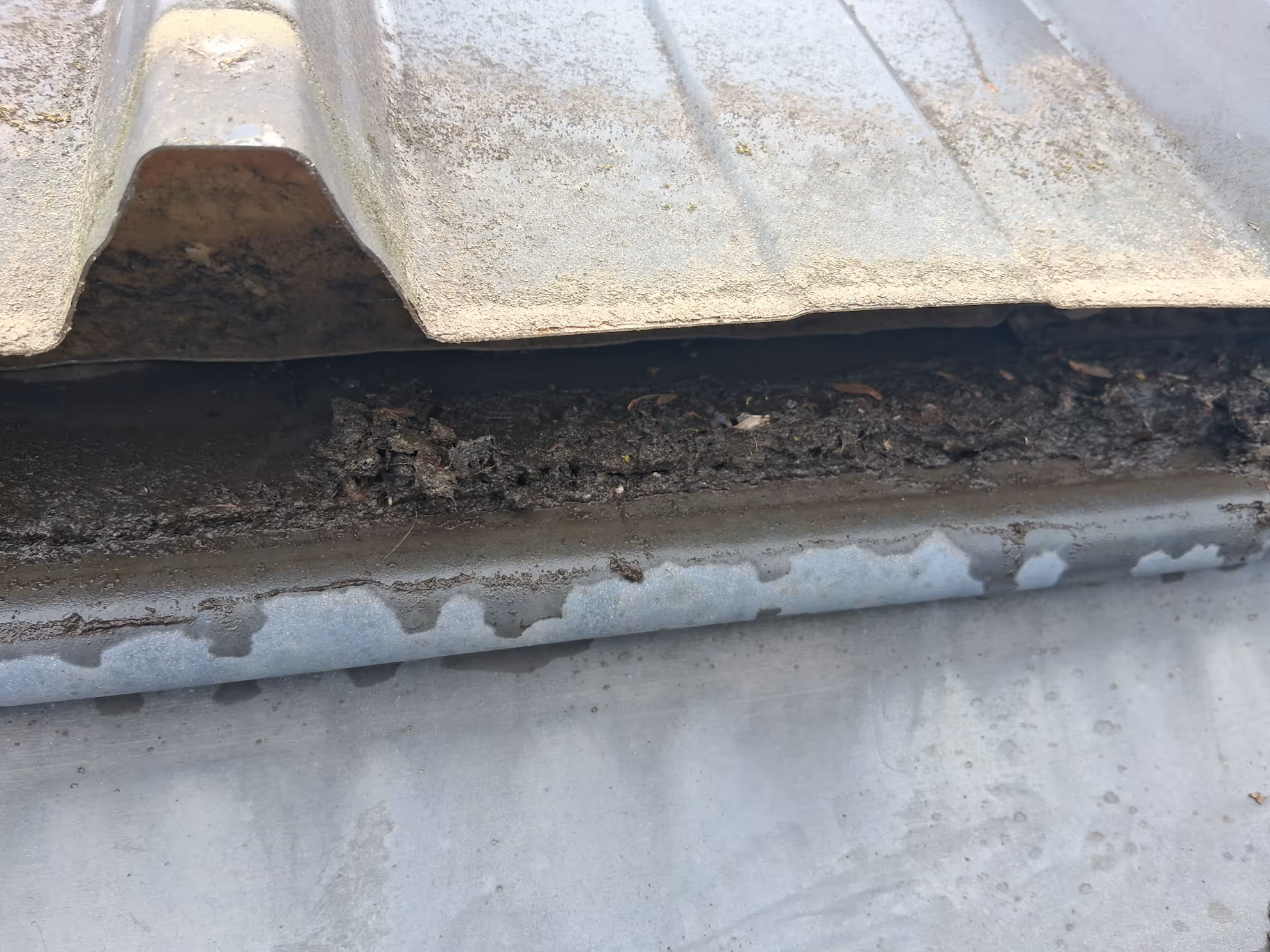
Precisely fitted, with only a minimal gap to the eaves flashing. What looked good became a risk over the years:
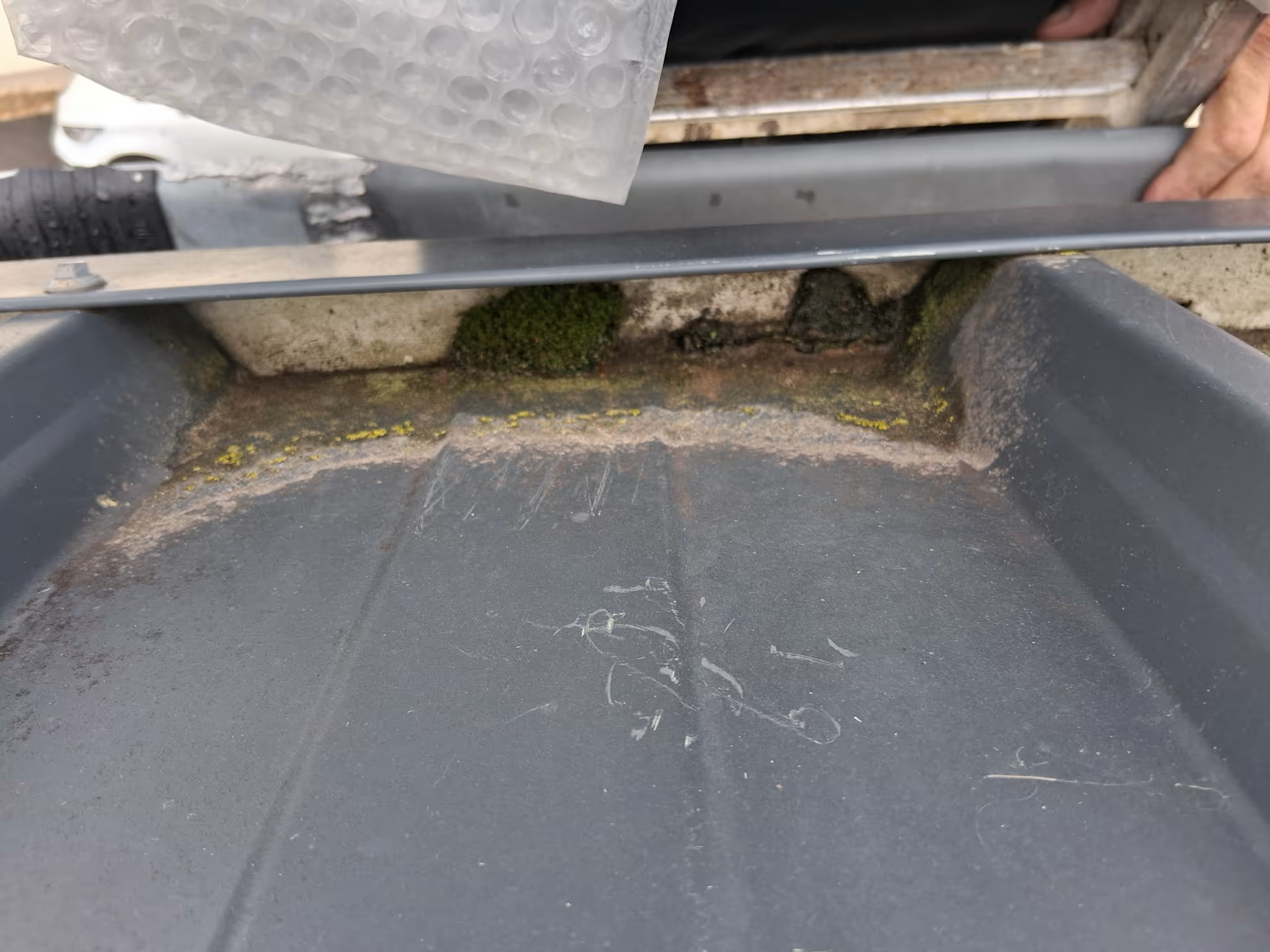
Dirt accumulated in the narrow gap
Debris from the slate roof of the main house added to the build-up
During heavy rain, the water could not drain away quickly enough
It backed up behind the base flashing to halfway up the panels
Where no expanding foam sealing tape had been fitted between the eaves flashing and the roof panel, water was able to rise by capillary action – allowing it to get behind the insulated façade.
From there, nothing could stop it from reaching the living room.
A lasting solution rather than a temporary fix
The solution was simple but effective:
The base flashing was adjusted and the drainage gaps widened – since then, there has been no further water ingress.
A classic case of: Small detail – big impact.
🤝 A word of thanks
A huge thank you to the client and the tenant for their open, relaxed and constructive cooperation.
Not a cross word about costs, responsibilities or compensation – instead, genuine teamwork, open brainstorming and trust.
The landlord immediately arranged a telescopic boom lift and tools for us, and all rooms were accessible at any time.
This is how a problem can not only be identified, but also resolved for the long term.
Thank you for working with us in this spirit – this is exactly what makes our trade so rewarding.
✅ Conclusion: Thorough analysis pays off
What looked like a typical case of water damage around the roller shutter box turned out to be a hidden detailing issue at the eaves – highlighting once again how important it is to investigate the cause thoroughly.
Do you have a similar problem, or are you unsure where the moisture is coming from?
👉 Then get in touch – we keep looking until we find it.
Planigraph – Service Friends
„Your service. Our craftsmanship.“